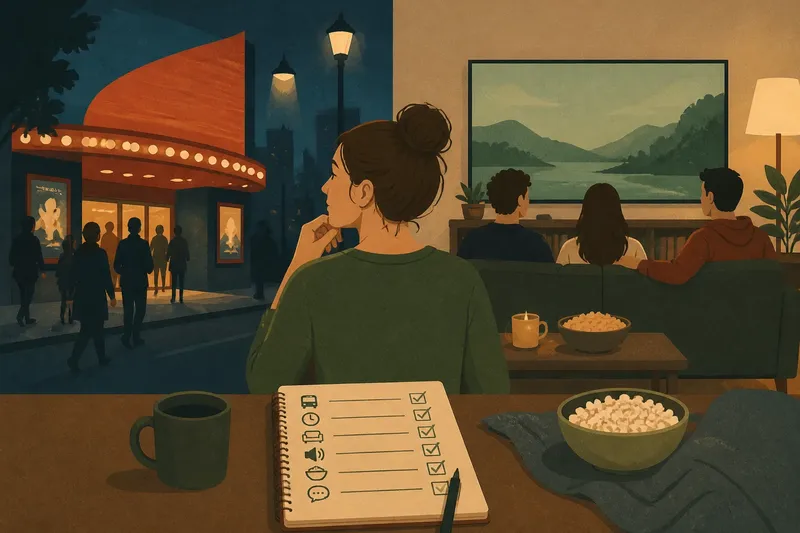
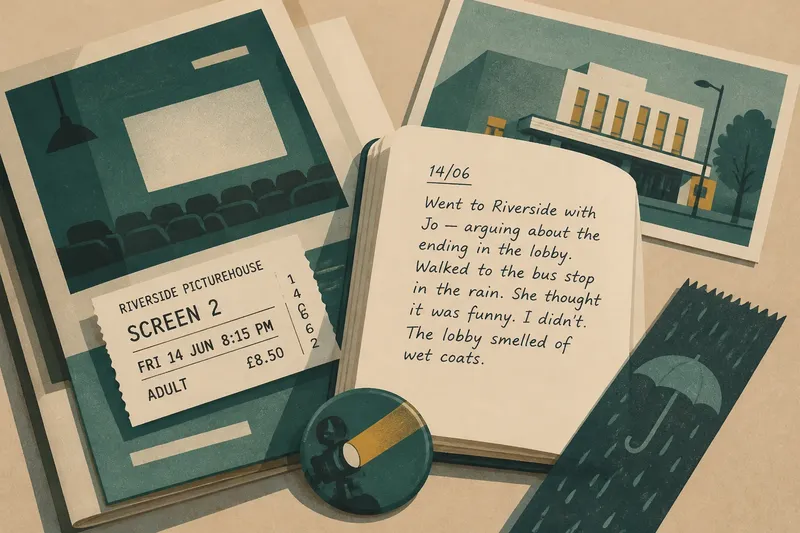
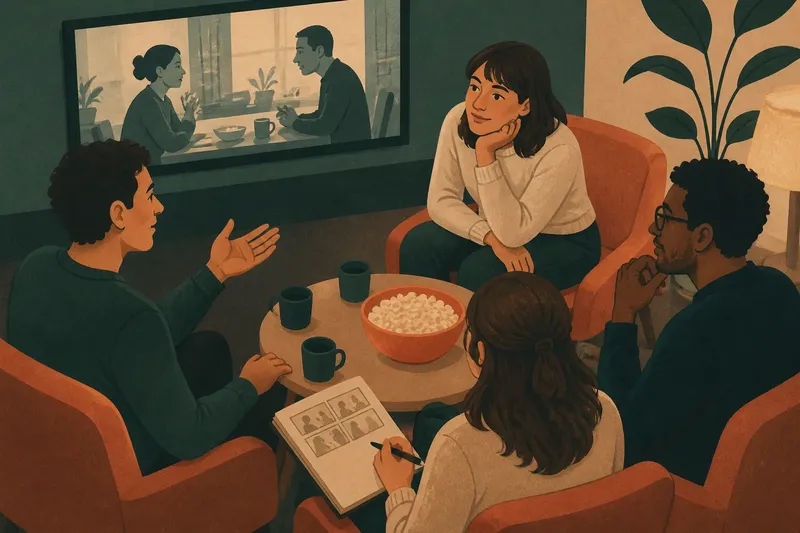
The Shared Screen Changes the Way a Film Is Watched
See how a shared screen shapes film memory, and learn to discuss what stayed with you without treating one viewer’s response as the group’s verdict.
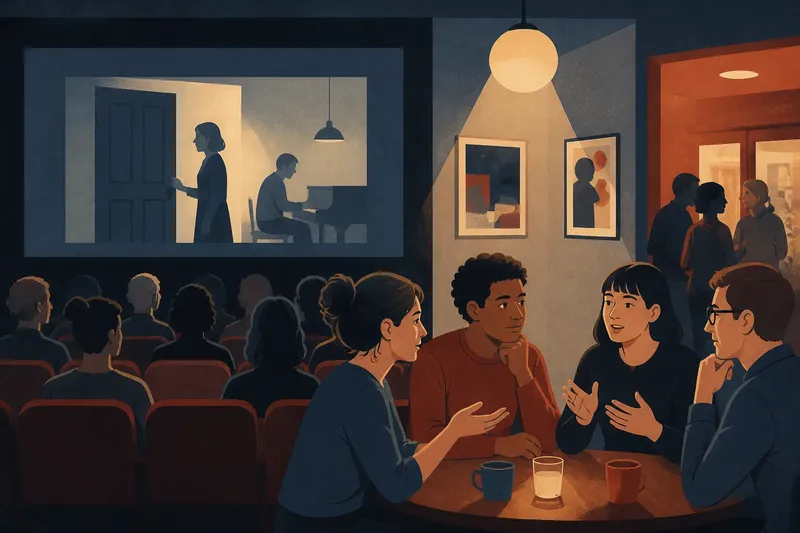
A shared screen changes film memory: after a communal screening, people often carry away different details of the same film. One remembers a pause before a line; another remembers the room’s laughter. Those differences can make the conversation more interesting, provided nobody is asked to speak for everyone.
How does a group screening shape what you remember?
Memory does not keep a film as a complete recording. It keeps particular moments, sounds and impressions. A screening gives those memories a social setting: the venue, the people beside you and the moment the lights come up can all become part of what you recall.
That setting is not an alternative version of the film. It is more like a frame around a photograph: it affects what you notice without changing what is pictured. The distinction matters when people compare recollections. A disagreement about which moment lingered is not necessarily a disagreement about what happened on screen.
How can you discuss different recollections?
Begin with a specific detail rather than a verdict. Ask which scene someone remembers, what they noticed in it, or what sound stayed with them. These questions invite an account without requiring the speaker to defend a complete interpretation.
Say you have just watched a film at a local arts centre with a friend. You remember a door closing during a quiet scene; your friend remembers the music stopping just before it. You each name the moment and describe what caught your attention. The result is a conversation about two concrete memories, not an argument over whose response represents the room.
If someone makes a broad claim such as “everyone loved that ending”, ask whether they mean the people they spoke to or the visible reaction they noticed. That small distinction keeps an observation from becoming an invented consensus.
What helps a post-screening conversation stay open?
- Check whether a comment names a scene. If it does, ask what stood out there; if it does not, invite the speaker to choose one moment rather than debate the whole film.
- Check whether someone is speaking for the group. If they are, ask whose response they heard; if they cannot name anyone, treat the claim as their impression instead.
- Check whether a disagreement concerns a detail or an interpretation. If it concerns a detail, recall the scene together; if it concerns meaning, let both readings stand without forcing a ruling.
- Check whether a quieter person has had room to speak. If they seem ready to join in, leave a pause; if they prefer not to, do not turn silence into a demand for testimony.
- Check whether the conversation is becoming a ranking contest. If it is, return to a particular image, line or sound; if nobody wants to revisit details, let the discussion end.
- Check whether someone is ready to talk immediately. If they are, ask an open question; if they are not, leave the conversation for later rather than supplying an interpretation on their behalf.
Which questions help explain a film memory?
Why do viewers remember different scenes?
People attend to different details, and their memories preserve different parts of the experience. Asking what someone noticed is more useful than assuming that one recollection is the correct measure of the screening.
Does a room’s reaction tell you what everyone thought?
No. A laugh, a silence or a comment belongs to the people who expressed it; it cannot report the private response of the whole room. Treat visible reactions as context, not a poll.
Should you explain your interpretation straight away?
You can, but a question about the scene may first reveal what another viewer remembers. If your accounts differ, describe the detail that shaped your reading rather than presenting it as the only available one.
What if nobody wants to discuss the film?
Let the screening end without requiring a debrief. People may prefer to sit with their own recollections, and conversation can happen later if someone has a particular moment they want to raise.
What does a shared-screen memory leave behind?
After a group screening, the useful question is often not whether the audience agreed, but what each person carried out of the room. A remembered pause, a stray line or the sound of laughter can open a conversation without making the group responsible for producing a single reading.
Keep the shared-screen memory in view when you talk about the film: name what you recall, ask what others noticed, and allow the answers to differ. The conversation can then add another layer to the occasion without pretending that one viewer has kept the official version.