A Solo Film Night with a Small After-Credits Ritual
A solo film night can feel more settled with a simple viewing setup and a brief note afterwards, without turning private enjoyment into a review.
A solo film night is easier to enjoy when the evening has a clear beginning and fewer interruptions. Choose one film, arrange the room, and decide what you will do if you lose interest; the rest can stay unplanned.
How do you make a solo film night easy to start?
Choose a film you are willing to watch now, rather than the title that seems most worthy in principle. A familiar comedy, a documentary or a story you have been curious about can all fit. This is a choice for one evening, not a declaration of taste.
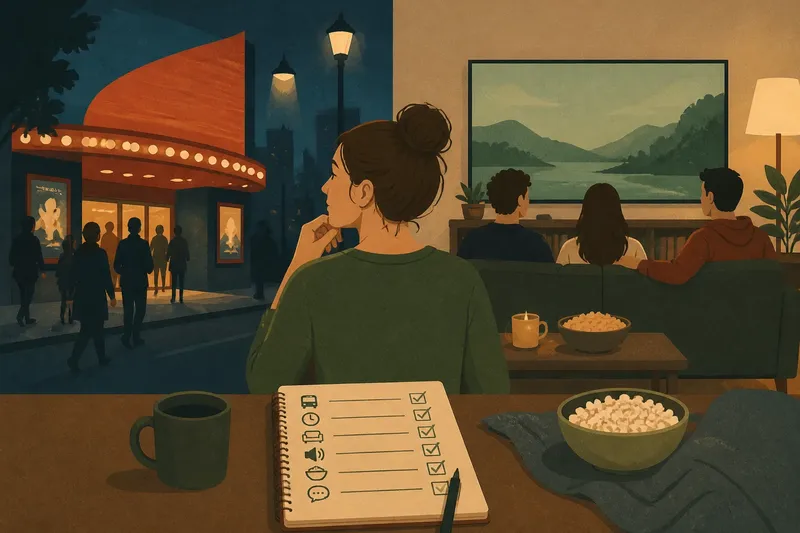
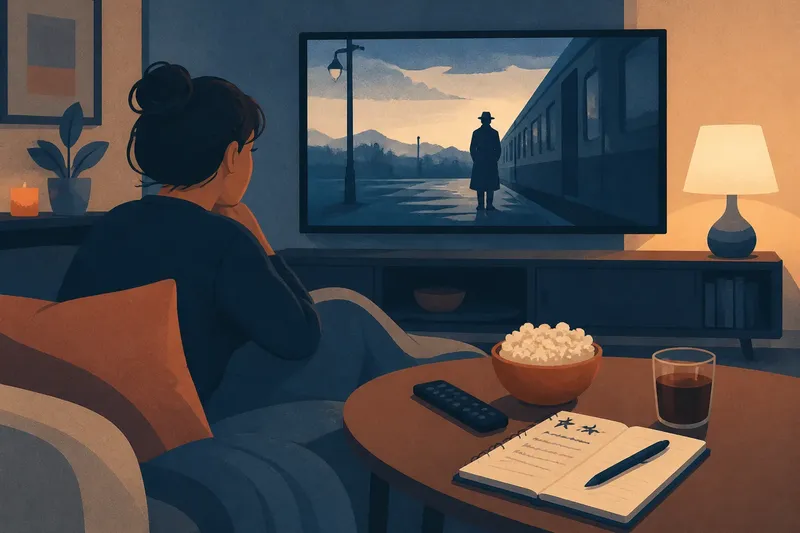
Set up the room before pressing play. Put the remote, drink and any snack within reach; choose whether you want a lamp on and subtitles enabled. Think of it like setting a place at the table: practical preparation, not a production.
Pick a start time that suits your actual energy and commitments. If you are tired, a shorter or gentler film may be easier to stay with. If you are alert but restless, a film with a strong narrative pull may suit better. There is no need to turn that judgement into a mood analysis.
What should you do when the film stops holding your attention?
Decide in advance that stopping is an ordinary option. You can pause to deal with an interruption, resume later, or switch the film off if you are no longer interested. Finishing is not the price of admission to a satisfying evening.
Say you have finished dinner, have a quiet stretch before bed and feel alert. You choose a film already available to you, put your phone in another room and begin. If you become tired halfway through, you stop and make a mental note of where you left off; the result is a clear stopping point, not an unfinished obligation. If you remain absorbed, you carry on without needing to check the clock.
What is worth writing after the credits?
If you want to mark the evening, write one sentence about a specific moment or choice: a sound, a cut, a setting, or the point where your attention shifted. A pocket notebook or private notes app will do. Keep the sentence for your own use; it need not resemble a review or settle whether the film was good.
For instance, “The train platform felt more tense than the chase” records a contrast you noticed. A score or verdict would answer a different question. The note’s purpose here is to name one detail that caught your attention, not to build a complete account of the film.
- Check whether you can name a particular image or sound; if you can, write that detail, and if not, leave the page blank.
- Check whether your attention shifted at a clear moment; if it did, note when, and if it did not, choose a different detail or stop writing.
- Check whether you are reaching for a verdict; if so, replace it with an observation, and if no observation comes, put the notebook away.
- Check whether you want the note to be private; if you do, keep it in a personal notebook or app, and if you want discussion, share it separately as your own response.
- Check whether writing is delaying your evening; if it is, leave the note unfinished, and if it is not, add one sentence only.
- Check whether you have a specific reason to revisit the film; if you do, record that reason, and if you do not, let the note stand without making a future plan.
How can you keep the ritual useful without making it a record-keeping task?
Use the note to make a small decision, not to maintain a catalogue. You might write down a scene because you want to discuss its editing with a friend, or record that you stopped because you were tired so you can resume from that point. If neither purpose applies, there is nothing to file.
Imagine you watch a quiet drama after a noisy day and write, “The long pauses felt restful tonight.” Later, while deciding what to watch with a friend, you see that sentence and choose a different film because you want something livelier. The note has helped with a concrete choice; it has not become a verdict on the drama or a duty to watch it again.
Solo film night need not produce a keepsake or a habit to maintain. The useful part may simply be that you chose a film, gave it a fair stretch of attention, and stopped when the evening called for something else. A brief after-credits note is optional; knowing what you want from the rest of the night is often enough.